IN-DEPTH
Antonio Gutiérrez
Written by Íñigo de Barrón Arniches, a journalist who has worked for media outlets such as El País, where he was the Financial Correspondent between 2000 and 2022, Europa Press, and Expansión. He has also collaborated with various television and radio channels, including RTVE, La Sexta, Cuatro, COPE, Cadena SER, and Onda Madrid. A uthor of the book “El hundimiento de la banca” (The Collapse of Banking), among others, he has received several awards throughout his career, including the Schroders Award for Best Article of the Year and the ING Journalism Award.
“Luis Valls liked to know what the other person thought, even if they had very different beliefs.”
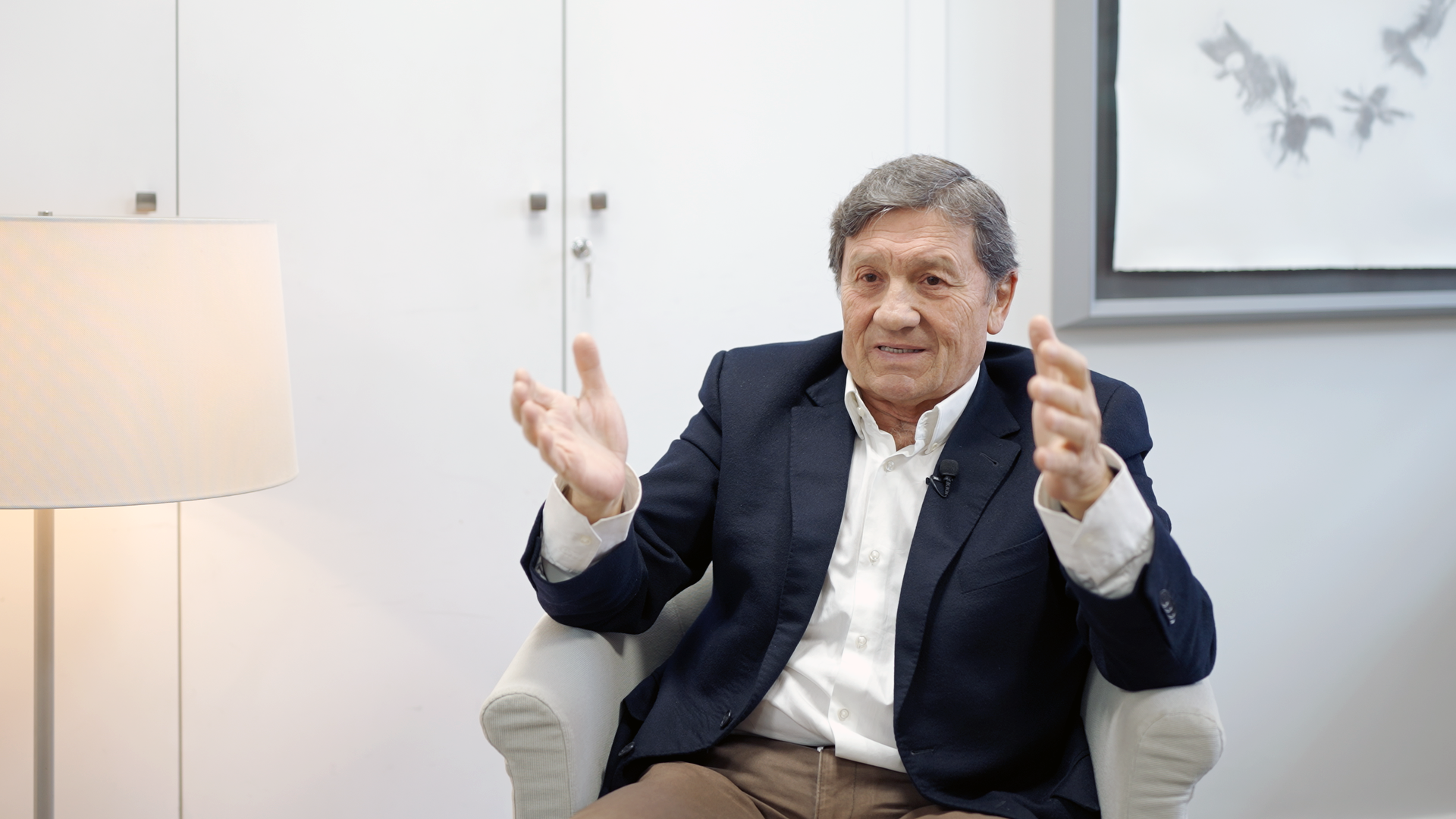
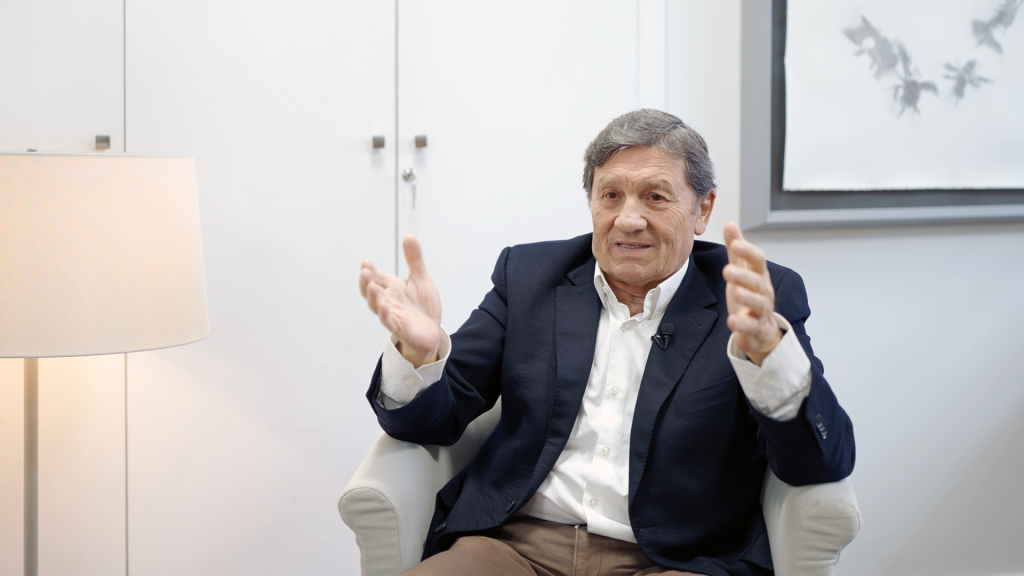
Antonio Gutiérrez (Orihuela, 1951) was the secretary of Comisiones Obreras from 1987 to 2000 and a member of the Communist Party until 1991. He was also elected as a PSOE deputy in Parliament in 2004 when José Luis Rodríguez Zapatero won the elections. An economist by profession and a member of the Research Service of Caja Madrid and later Bankia, Gutiérrez maintained an interesting relationship with Luis Valls over the years. Comisiones Obreras was the majority union both at Banco Popular and throughout the banking sector, a factor that may have made Valls aware that he needed to engage with its leaders for the institution to function properly.
What united them was their interest in politics and their shared conviction that democracy must be supported without hesitation. Despite being in very different ideological positions—Gutiérrez was an atheist with a communist background—he maintained a certain level of trust with Valls, a prominent member of Opus Dei.
“Valls was very cultured; you could talk with him about many things. Witty and humorous, he enjoyed engaging in debates with a dynamic mindset. He wanted to understand the other person’s thoughts, even if their ideas were very different.”
Question. How did your personal relationship with Luis Valls begin?
Answer. My relationship with the president of Banco Popular started in the democratic era. Comisiones Obreras secured more than 70% of union representation in the first elections at Banco Popular. These were very valuable union leaders for Comisiones Obreras, who had gained experience within the institution. The history of labor relations at Popular had been negative because the head of human resources was a former prison officer under Franco. I found it inexplicable. It was a tough time, with numerous layoffs, reprisals, and forced relocations of union members from Comisiones Obreras. We’re talking about the period from 1972 to 1975, until the democratic Transition.
Q. And then, did the situation change?
A. After Franco’s death, the institution began normalizing relations with Comisiones Obreras and other unions. It took a more open approach, and labor amnesty was immediately granted to all those who had been dismissed. Our union rights also began to be recognized—something many other companies refused to do, even though it was established by the Organic Law on Trade Union Freedom. I also benefited from this since I had been dismissed from Michelin.
Q. Did any specific action by Luis Valls that caught your attention during those turbulent years?
A. Yes, there was one particularly significant event that he never wanted to be publicized. During the first PCE festival held in Madrid’s Casa de Campo, a bus coming from Murcia was involved in a traffic accident in which many people lost their lives. Without anyone asking him, he called to say that, through various foundations, he would cover the education costs of the children of those who had died in the accident. And he fulfilled that promise to the end—it happened on September 30, 1981. I don’t know if he funded their education at university, but even if it was just for a few years, I think it was a commendable gesture because they were humble families.
Q. Was that when you first had personal contact with him?
A. No, I first asked him to ensure that union representatives at Banco Popular could work as full-time union members without their salaries being affected—specifically in terms of seniority-based pay raises—or their professional careers being hindered. It was a legal right, but many companies didn’t comply with it, whereas Popular did. Luis made it happen.
Q. Were there more gestures like this?
A. Yes. Later, around 1985, when Spain was discussing joining the European Economic Community (which was finalized in 1986), I asked him to provide us with spaces where we could hold meetings, discussions, seminars, and workshops with workers to explain to the labor movement the importance of the integration process and the negotiations with European communities. He allowed us to use spaces in the Beatriz Building, but he asked me to give him a signed photograph. I had just been interviewed for a magazine, and he handed me a photo, which I signed. I don’t remember exactly what I wrote, but it was ironic. Later, an ambassador mentioned seeing it in Valls’ office during a visit. That photo certainly sparked a lot of conversation.
Q. Did you continue to meet after that?
A. Yes, though not regularly, we saw each other occasionally—sometimes in the bank’s dining room, which had a large circular marble table. On another occasion, in 1988, I asked him for a loan to support a project to restore the abandoned village of Morillo de Tou in the Sobrarbe region (Huesca). The Comisiones Obreras Union of Aragón had requested the town from the Hydrographic Confederation, as it had been deserted due to an unfinished reservoir project. The idea was to turn it into a training center for union members and a small vacation town. After much volunteer work, we realized we needed financial backing to avoid wasting our efforts. The union couldn’t fund it as it wasn’t a priority. They needed over 50 million pesetas.
Q. And how did he react?
A. I was a bit too clever. I told him the project could also boost tourism at the nearby Torreciudad sanctuary, which belonged to Opus Dei. Valls listened with a smirk. Of course, I didn’t convince him. He said Banco Popular couldn’t grant the loan, but he personally arranged for it—probably through foundations—at an interest rate half of the market rate. The loan was fully repaid, and today, the village remains a successful example of rural recovery.
Q. The early 1980s, with significant legislative changes and political unrest, gave you plenty to debate.
A. Yes. After the attempted coup in Congress, we were shocked by the silence of the CEOE leadership, then headed by Carlos Ferrer Salat. The AEB was also very reserved. In the union, we knew that many business people and bankers preferred to remain on the sidelines, taking weak positions during such difficult times. However, Luis Valls was very clear in his condemnation of the coup attempt. That deserves recognition.
Q. Did your political passion influence those meetings?
A. He was already known as a man of Opus Dei, and I was clearly on the left. Still, as I mentioned earlier, we found common ground because he had a broad vision of democracy and how the transition had unfolded. He fully supported the new democratic regime. It would be presumptuous of me to say that I deeply understood Luis Valls. Still, unlike other business people, he knew the dictatorship was unsustainable, as were any attempts to turn back time. This is that an impression is simply an impression, and therefore, it should be taken cautiously. At that time, a significant part of what we call the economic and business powers believed until the very end that Francoism could continue without Franco. And then there were others, fewer in number, who knew that the dictatorship was defeated even before Franco’s death. José María Areilza, who was the first mayor of Bilbao when Franco’s troops entered, used the phrase that the dictatorship had fallen “in a storm of strikes,” a phrase later attributed to some leftist leaders. Areilza was the first Minister of Foreign Affairs in the monarchy’s first government. In 1975 alone, I believe there were 115 million hours of strikes.
Q. Then, at the beginning of 1979, the Trade Union Action Law was approved, right?
A. The introduction of this law triggered a sort of bankers’ and business leaders’ conspiracy against Adolfo Suárez. They claimed it was the Sovietization of the Spanish economy. Luis Valls did not take part in that corporate witch hunt against Suárez, which, as we know, was no joke, as it fueled the later coup attempts. For some reason, the Banco Popular and its president inspired more trust in me than other bankers when discussing many issues. Perhaps someone similar to Valls was José Ángel Sánchez-Asiaín from BBV, but the rest, no.
Q. Coming from very different ideologies, you had your discussions. Do you think Valls enjoyed debating with people who believed differently?
A. Luis was very cultured; you could talk to him about many things. He was ironic and humorous and enjoyed engaging in debates on various topics. He had a dynamic way of thinking—he liked to understand what was happening around him, anticipate the future, not remain stagnant, take risks, and learn what others thought, even if it differed from his beliefs. He could synthesize ideas, share knowledge, and seek solutions to problems. He was a man who listened, who spoke to you, and with whom you could reach basic agreements.
Sometimes, he surprised me. On one occasion, I told him about a colleague from the Workers’ Commission who was also an artist, Ángel Campos. I didn’t know much about painting, but I told him about it, and he offered him a space to exhibit in the Beatriz Building, the bank’s headquarters. Valls even bought a painting from him; I believe he hung it in the same office where he had my photograph. I think he would tell visitors that it was a painting made by a trade unionist. In short, he was a cultured and reasonably tolerant person. We joked around. I explained my atheism to him based on Kant’s Critique of Pure Reason.
Q. And what did Luis Valls argue?
A. He spoke about the roots of Christian humanism and the organization of the Church. He did not claim that Leo XIII’s social doctrine of the Church was the foundation for creating yellow unions, one of the worst and most perverse inventions ever.
Q. Later, he suffered the threat of ETA, something you also experienced.
A. Yes, it’s true that we both lived through that scourge. I believe it affected him that he could no longer retreat to the mountains for a few days as part of his routine—he had to change his way of life. That was something he enjoyed.
Q. Do you think Valls was good at handling silences in conversations?
A. sometimes, there would be a slightly prolonged silence; someone would talk about trivial matters, and then silence would fall again, creating a situation where you’d see who would be the first to break it and get to the point. He knew how to control silences like the great masters who don’t speak ex-cathedra but still demonstrate that they know more than you. Usually, our conversations revolved around labor issues and the political situation. The truth is, he never talked to me about Opus Dei.
Q. A book titled Opus has been published, claiming that Banco Popular’s financial resources were used to fund Opus Dei’s expansion worldwide through foundations, with Luis Valls as the leading financier. The organization has denied this. Could it have happened?
A. I can’t say because I didn’t know the bank that well. But I also don’t picture Valls engaging in off-the-books accounting; the bank was thoroughly scrutinized. As I mentioned, we never talked about Opus Dei—he never brought it up, and I never asked. What I consider a success was Grupo Popular’s business strategy of creating regional banks in different parts of Spain. I found that very beneficial for the country’s economic development. With some differences, it was somewhat similar to the role played by the savings banks, whose downfall has been disastrous and is partly responsible for the problem of Spain’s depopulated rural areas. I think Spain will miss both the savings and regional banks of Popular.
Q. How did you experience the end of Banco Popular?
A. I believe his successors got involved in real estate ventures that didn’t align with Valls’ strategy. He ran the most profitable bank because he focused on family and regional economies, the real and productive economy, far from speculation and the fever of quick profits that later took hold.
Q. And Valls’ death?
A. I felt his loss. I had lost touch with him years before it happened, but I thought he was one of those whose death should not erase what they had done in life, mainly what he achieved at Banco Popular. Despite what happened afterward, his legacy should not be ruined.